
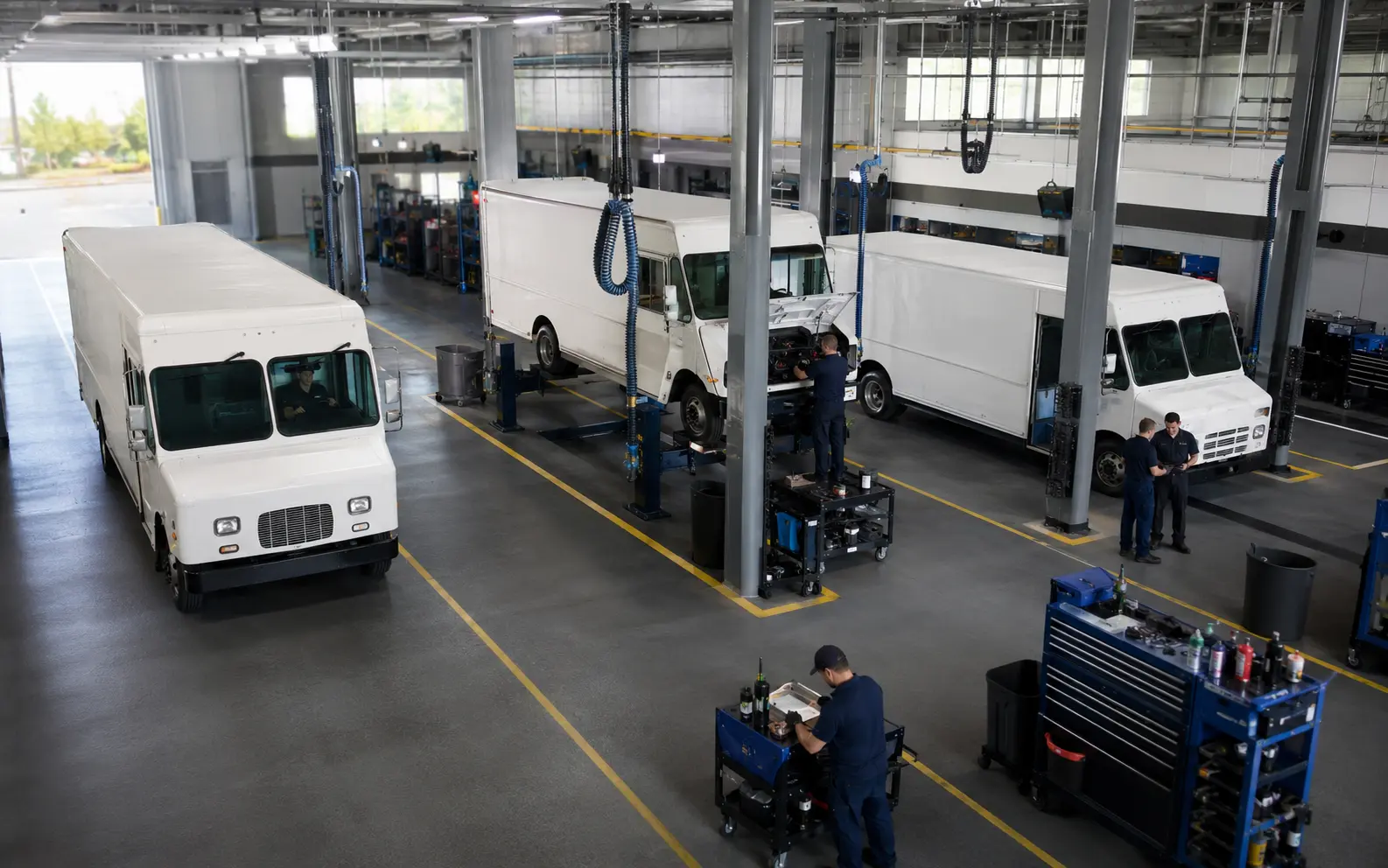
Review the major mechanical, electrical, chassis, body, and safety systems that should be addressed through a structured recurring maintenance program.
Recurring Preventive Maintenance Service
The exact interval must be based on the chassis, engine, powertrain, operating environment, manufacturer requirements, oil specification, engine hours, and duty cycle.
Each scheduled PM service should generally include the following categories.
Engine and Lubrication
- Change engine oil when due.
- Replace the oil filter.
- Inspect for engine leaks.
- Check belts, tensioners, and pulleys.
- Inspect engine mounts.
- Review unusual engine noise.
- Check crankcase-ventilation components.
- Review oil-consumption history.
- Inspect air-intake components.
- Reset the maintenance reminder when appropriate.
Do not extend oil intervals solely because the truck has low mileage. High idle time and repeated short trips may justify a shorter severe-duty interval.
Cooling System
- Inspect coolant level and condition.
- Pressure-test the system when indicated.
- Inspect radiator and surge tank.
- Check hoses and clamps.
- Inspect the water pump.
- Check the fan and fan clutch.
- Inspect the thermostat’s operating performance.
- Clean external debris from heat exchangers.
- Test freeze and corrosion protection.
- Review overheating history.
A small coolant leak can quickly become an engine failure when the vehicle operates through a full delivery route.
Fuel System
- Inspect fuel lines and connections.
- Check the fuel tank and mounting straps.
- Inspect the filler neck and cap.
- Replace fuel filters at the required interval.
- Check for leaks and corrosion.
- Drain water separators when applicable.
- Review fuel-pressure or performance faults.
Air Intake
- Inspect the air filter.
- Replace it based on condition and required interval.
- Inspect the airbox and ducting.
- Check clamps and seals.
- Look for signs of dust entry.
- Inspect turbocharger plumbing when applicable.
Transmission and Driveline
- Check transmission-fluid level and condition.
- Inspect for leaks.
- Review shifting quality.
- Inspect transmission mounts.
- Examine driveshafts.
- Lubricate applicable fittings.
- Inspect universal joints.
- Check carrier bearings.
- Review differential-fluid condition.
- Inspect axle seals.
Clunks, vibration, delayed engagement, and new shifting behavior should be investigated promptly.
Brake System
- Measure friction material.
- Inspect rotors or drums.
- Check calipers, chambers, and hardware.
- Inspect hydraulic or air lines.
- Check for leaks.
- Test parking-brake operation.
- Review brake adjustment.
- Inspect ABS components and warning indicators.
- Examine wheel seals for contamination.
- Record measurements and remaining service life.
“Brakes look okay” is not adequate documentation. Measurements allow the fleet to forecast repairs and prevent vehicles from unexpectedly reaching service limits.
Steering
- Check steering-wheel free play.
- Inspect the steering gear.
- Inspect linkage and joints.
- Check the pitman arm and drag link.
- Inspect tie rods.
- Review steering-column components.
- Check power-steering lines and fluid.
- Inspect mounting hardware.
- Road-test for pulling, wandering, or binding.
Suspension
- Inspect springs.
- Check shackles and hangers.
- Inspect U-bolts.
- Review bushings.
- Check shocks.
- Inspect air springs when equipped.
- Check torque rods and mounting points.
- Inspect axles.
- Look for abnormal ride height.
- Compare findings with tire-wear patterns.
Tires and Wheels
- Measure tread depth.
- Set inflation pressure.
- Inspect for damage and irregular wear.
- Rotate tires when appropriate.
- Check wheel and rim condition.
- Inspect wheel fasteners.
- Check hubs and bearings.
- Inspect valve stems.
- Verify that tire ratings are appropriate for the vehicle and load.
Battery and Charging System
- Test battery condition.
- Test alternator output.
- Inspect the starter system.
- Clean and secure terminals.
- Inspect cables.
- Check hold-downs.
- Review parasitic draw when repeated battery failures occur.
- Confirm that installed accessories are properly connected.
Delivery vehicles often power cameras, tablets, telematics, interior lighting, and charging equipment. Improper aftermarket wiring can create chronic no-start and electrical problems.
Exhaust and Emissions Systems
- Inspect the exhaust for leaks.
- Check hangers and mounting.
- Inspect heat shielding.
- Review diesel particulate filter status.
- Review regeneration history.
- Inspect DEF components when equipped.
- Investigate active or recurring emissions codes.
- Check sensors and wiring.
- Confirm that exhaust outlets are properly positioned.
Clearing an emissions code without diagnosing the cause is not a repair.
HVAC and Defrosting
- Test the heater.
- Test air conditioning.
- Verify defroster performance.
- Inspect blower operation.
- Check cabin filters when equipped.
- Inspect refrigerant lines.
- Review coolant flow and heater hoses.
Defrosting and visibility problems should be treated as operational safety concerns, particularly in winter markets.
Chassis and Frame
- Inspect frame rails and crossmembers.
- Check body mounts.
- Review corrosion.
- Look for cracks and improper repairs.
- Inspect fasteners.
- Check rear-impact protection when applicable.
- Inspect steps, bumpers, and tow points.
- Review previous collision areas.
Step-Van Body and Cargo Area
- Inspect folding or sliding doors.
- Check door tracks and rollers.
- Lubricate hinges and latches.
- Inspect bulkheads.
- Tighten shelving.
- Check flooring.
- Repair roof leaks.
- Secure interior panels.
- Check cargo restraints.
- Inspect entry steps and grab handles.
- Test cargo lights.
- Confirm emergency-exit operation.
This work is routinely neglected because it is outside the engine compartment. For delivery operations, however, body condition directly affects driver productivity and vehicle usability.