
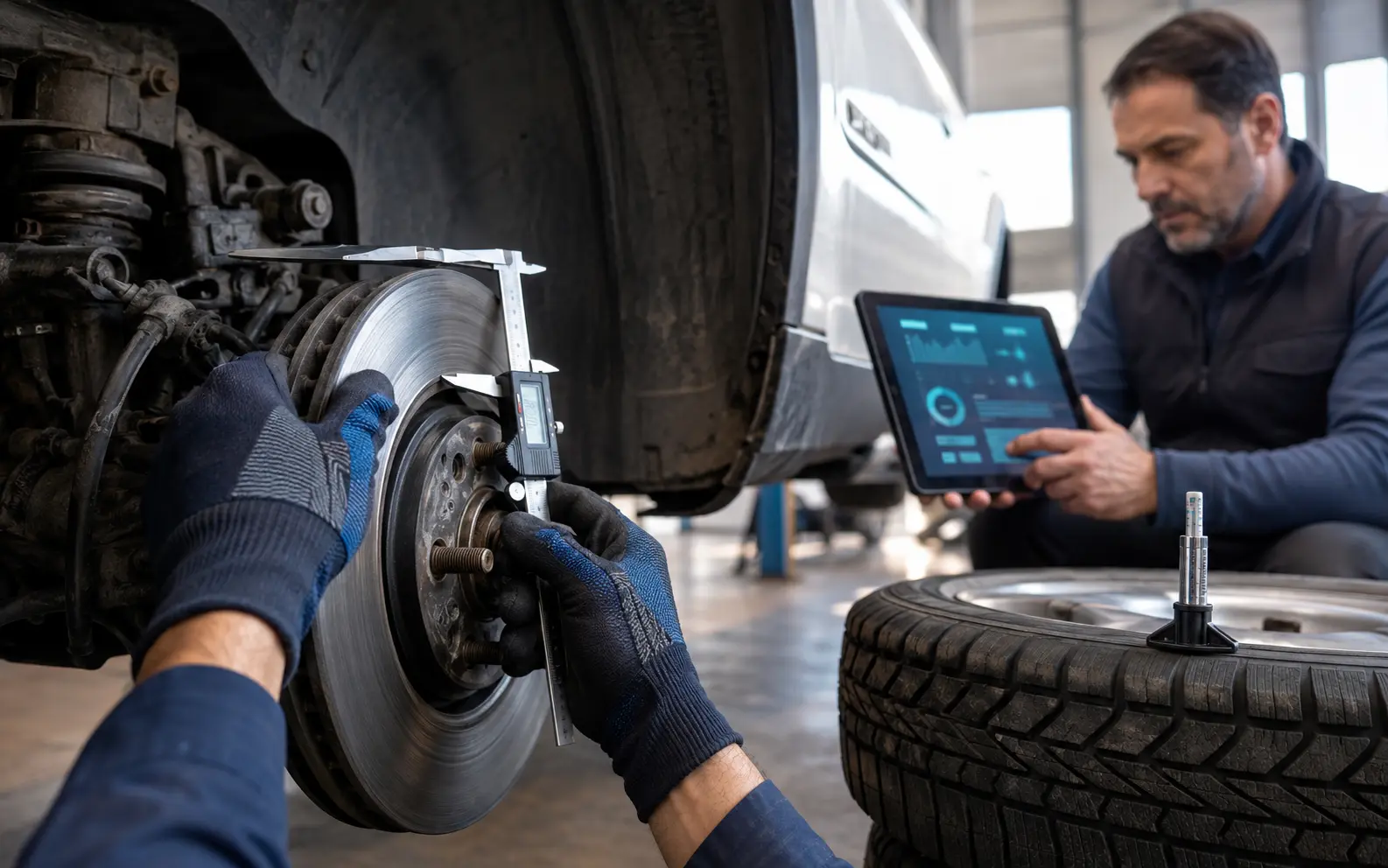
Turn preventive-maintenance findings into action by defining repair priorities and recording measurements that support forecasting and follow-through.
Establish Repair Thresholds
The checklist should lead to action. Every finding should be classified.
Remove from Service
Use for conditions that may affect safe operation or create a serious mechanical risk.
Examples include:
- Brake failure
- Steering problems
- Severe tire damage
- Fuel leaks
- Significant wheel or suspension defects
- Dangerous structural damage
- Overheating
- Low oil pressure
- Smoke or fire risk
Repair Before Next Dispatch
Use for defects that are likely to worsen, create a breakdown, or interfere with the route.
Examples may include:
- Charging-system failure
- Active coolant leak
- Unsafe door or step
- Inoperative required lighting
- Significant fluid leak
- Starting problems
- Engine derate warning
Schedule Promptly
Use for developing problems that do not currently prevent safe operation but should not wait until the next long-range service.
Monitor
Use only when the condition is documented, safe, within specifications, and assigned a specific reinspection date.
“Monitor” should not mean “ignore until it breaks.”
Track Maintenance Measurements
A useful PM inspection creates data—not just a completed checkbox.
Record:
- Date
- Mileage
- Engine hours
- Tire pressures
- Tread depths
- Brake measurements
- Fluid condition
- Battery-test results
- Diagnostic codes
- Repair recommendations
- Estimated remaining life
- Parts ordered
- Corrective-action status
- Technician identity
- Next service due date
Trend data makes it possible to predict repairs and schedule them before the vehicle becomes unavailable.
Common Preventive Maintenance Failures
Maintaining Only by Mileage
This ignores engine hours, time, idling, stop count, and severe-duty operation.
Treating Driver Reports as Complaints
Driver observations are early-warning data. Ignoring them turns minor defects into breakdowns.
Replacing Parts Without Finding the Cause
Repeated batteries, tires, sensors, or brakes may indicate a deeper electrical, alignment, wiring, or operating problem.
Failing to Record Measurements
Without brake, tire, fluid, and battery data, fleets cannot forecast maintenance accurately.
Deferring Body Repairs
Broken steps, doors, shelves, and latches can make an otherwise functional vehicle unsafe or unusable.
Maintaining Spare Vehicles Last
A spare vehicle must be inspected, serviced, registered, and ready to dispatch. Otherwise, it is not productive fleet capacity.
Clearing Warning Lights Without Diagnosis
Deleting a code does not correct the condition that caused it.