
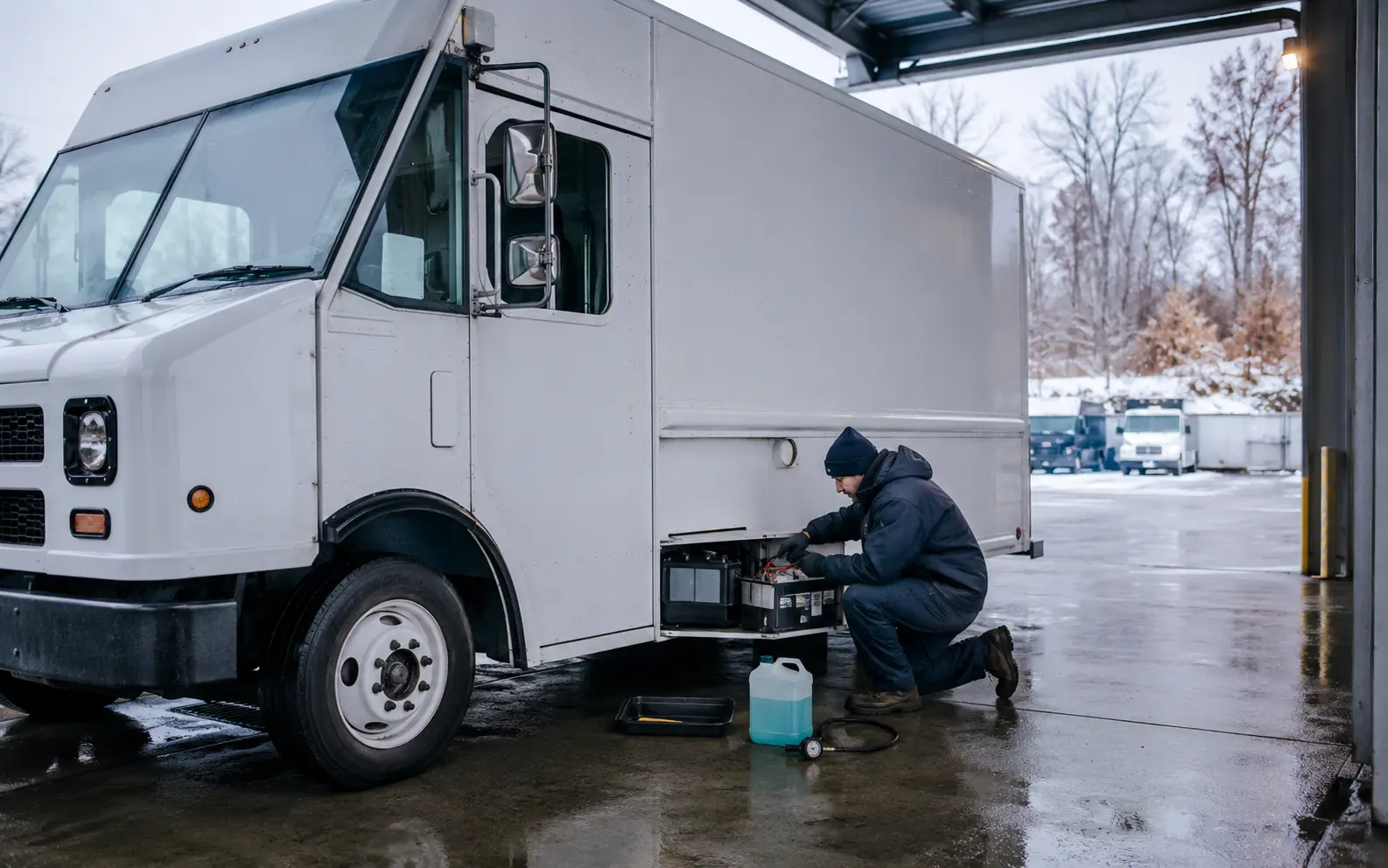
Prepare delivery vehicles for winter, spring recovery, summer heat, and peak-season operating demands without relying on mileage alone.
Seasonal Step-Van Maintenance
Winter Preparation
Before cold weather:
- Load-test batteries.
- Verify charging performance.
- Test heaters and defrosters.
- Inspect wipers and washers.
- Confirm coolant freeze protection.
- Check tire condition and traction.
- Inspect door seals.
- Lubricate locks and door mechanisms.
- Repair roof or windshield leaks.
- Inspect air-system moisture control when applicable.
- Check corrosion protection.
- Prepare emergency equipment.
Spring Review
After winter:
- Wash the undercarriage.
- Inspect corrosion.
- Check brake and fuel lines.
- Inspect suspension damage.
- Review alignment and tire wear.
- Examine wiring and connectors.
- Repair water intrusion.
- Inspect body mounts and steps.
Summer Preparation
Before hot weather:
- Inspect cooling-system performance.
- Check radiator and condenser airflow.
- Test air conditioning.
- Inspect belts and hoses.
- Test batteries.
- Review tire pressure.
- Check engine and transmission temperatures.
- Investigate any history of overheating.
Peak-Season Preparation
Before the fleet’s busiest period:
- Complete overdue PM services.
- Replace components approaching wear limits.
- Confirm spare-vehicle readiness.
- Inspect rental or seasonal vehicles.
- Stock common parts.
- Verify vendor availability.
- Review tire and brake forecasts.
- Confirm inspection and registration dates.
Peak season is the wrong time to discover that spare vehicles have dead batteries, expired inspections, or unresolved defects.
Federal Maintenance Responsibilities
Under 49 CFR § 396.3, motor carriers must systematically inspect, repair, and maintain vehicles under their control. Parts and accessories must remain in safe and proper operating condition.
Covered commercial motor vehicles must also pass the periodic inspection required by 49 CFR § 396.17 at least once during the preceding 12 months. The annual inspection does not replace the carrier’s continuing responsibility to maintain the vehicle between inspections. Review 49 CFR Part 396.
State and local inspection, emissions, registration, and equipment requirements may also apply.
Mobile Preventive Maintenance
Many recurring services can potentially be completed where the fleet is parked.
Mobile fleet service may be appropriate for:
- Oil and filter service
- Multipoint inspections
- Battery testing and replacement
- Lighting repairs
- Minor electrical work
- Belt and hose replacement
- Fluid-leak evaluation
- Door and body-hardware repairs
- Scheduled fleet-condition reviews
- Certain inspection preparation and corrective repairs
Grouping vehicles at one location can reduce transportation time and allow maintenance to be performed during evenings, weekends, or other nonproductive periods.
Major repairs, alignment work, structural repairs, and jobs requiring heavy equipment may still require shop service.