
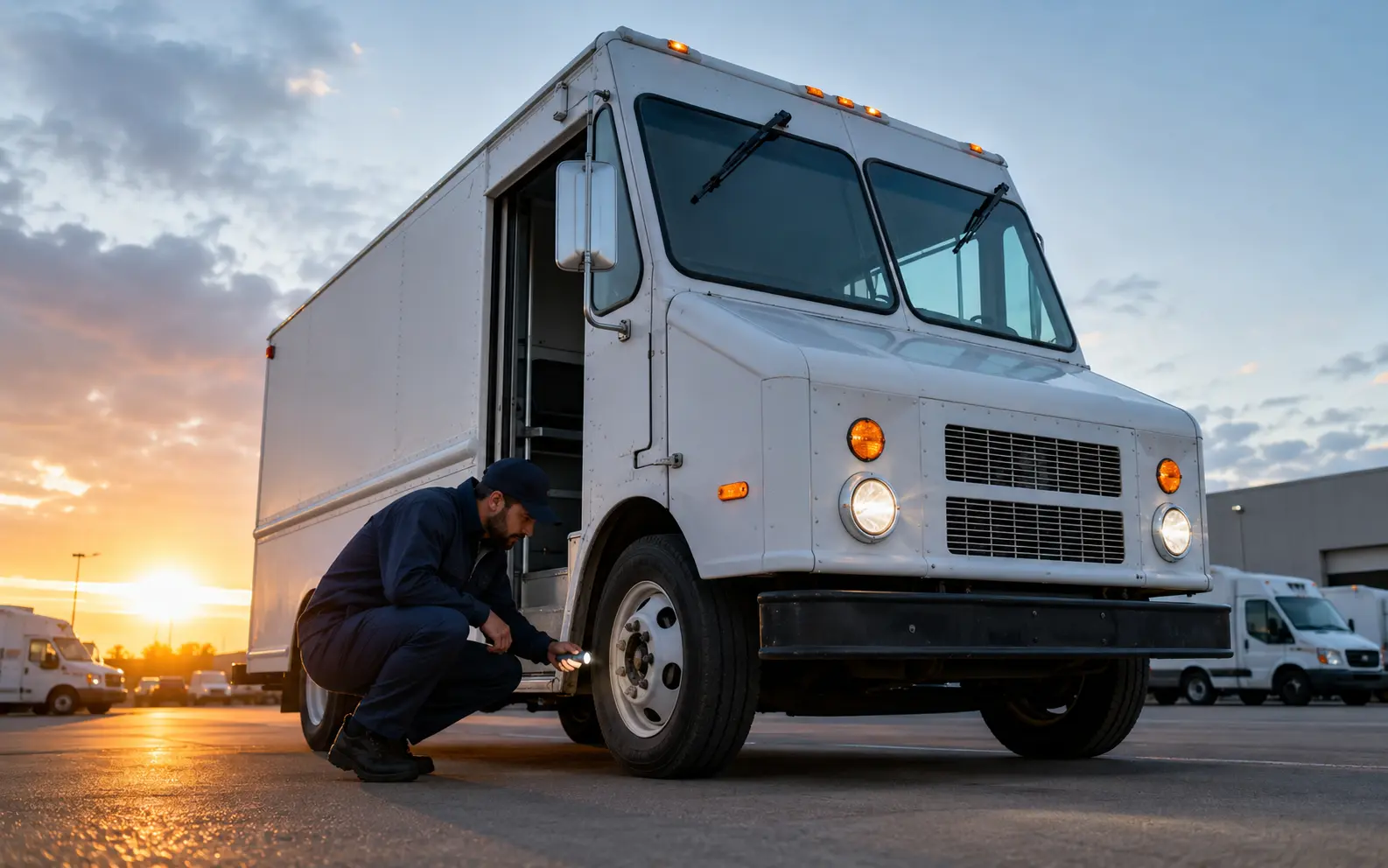
Create repeatable driver and fleet-manager inspections for tires, fluids, lighting, doors, safety equipment, warning indicators, and route-related defects.
Daily Driver Checklist
Drivers are often the first people able to identify a change in vehicle condition. A short, consistent inspection is more valuable than a long checklist that nobody completes correctly.
Before Operation
Exterior Walkaround
Check:
- New body damage
- Fluid under the vehicle
- Tire condition and inflation
- Wheel and rim condition
- Missing or loose wheel fasteners
- Lights and reflectors
- Mirrors and cameras
- Windshield condition
- Wiper blades
- License plate and markings
- Fuel or charging connection
- Exhaust components
- Rear and side doors
- Entry steps and grab handles
Under the Hood
When the vehicle design and operating procedure permit, check:
- Engine oil
- Coolant
- Brake fluid
- Power-steering fluid
- Windshield-washer fluid
- Belts and hoses
- Battery security
- Visible leaks
- Loose wiring or connections
Do not open a pressurized cooling system while it is hot.
Cab
Verify:
- Brake operation
- Parking brake
- Steering response
- Horn
- Seat belt
- Gauges
- Warning lights
- Heater and defroster
- Windshield wipers and washers
- Mirrors
- Backup camera
- Emergency equipment
- Driver seat security
- Cab and cargo-door operation
Cargo Area
Inspect:
- Shelving
- Bulkhead
- Cargo restraints
- Interior lighting
- Floor condition
- Emergency exit
- Door latches
- Loose equipment
- Water intrusion
- Protruding fasteners or sharp edges
During the Route
Drivers should report:
- New warning lights
- Changes in brake feel
- Steering pull or looseness
- Unusual vibration
- Overheating
- Loss of power
- Transmission hesitation
- New noises
- Fluid smells
- Smoke
- Charging-system problems
- Tire-pressure alerts
- Doors that stop securing properly
After the Route
Document defects discovered during operation and identify the correct unit number, mileage, location, symptoms, and warning indicators.
Photos or short videos can substantially improve repair triage.
A current annual inspection does not make a vehicle safe to operate with a new defect. Federal rules require safety-related defects identified through applicable driver reporting to be repaired before the vehicle is operated again. See 49 CFR § 396.11.
Weekly Fleet Checklist
A manager, technician, or designated fleet employee should complete a more detailed review at least weekly for high-utilization vehicles.
Tires and Wheels
- Record tire pressure.
- Measure and record tread depth.
- Check for uneven wear.
- Inspect sidewalls.
- Check dual-tire spacing when applicable.
- Examine valve stems and caps.
- Look for wheel damage.
- Check for evidence of loose fasteners.
- Inspect for hub or axle-seal leaks.
Uneven tire wear should trigger a steering, suspension, inflation, and alignment review—not simply tire replacement.
Fluids and Leaks
- Check all accessible fluid levels.
- Identify the type and source of visible leaks.
- Record repeated fluid additions.
- Inspect hoses, reservoirs, lines, and fittings.
- Verify fuel and DEF caps when applicable.
Repeatedly adding fluid without locating the cause is not maintenance. It is deferring a diagnosis.
Lighting and Electrical Equipment
- Test all required exterior lights.
- Inspect lenses and mounting.
- Test cargo-area lighting.
- Review battery condition.
- Check for loose or damaged wiring.
- Confirm camera and safety-system operation.
- Review dashboard warning lights.
Doors, Steps, and Body Equipment
- Lubricate applicable door hardware.
- Inspect hinges, rollers, tracks, and latches.
- Check entry steps.
- Check grab handles.
- Inspect bulkheads and shelving.
- Review roof and cargo-area leaks.
- Secure loose body panels.
- Inspect rear bumper and protection structures.
These components may not disable the powertrain, but they can make the vehicle unsafe or unusable for delivery work.
Emergency Equipment
Verify that required warning devices and fire extinguishers are present, accessible, properly secured, and serviceable.