
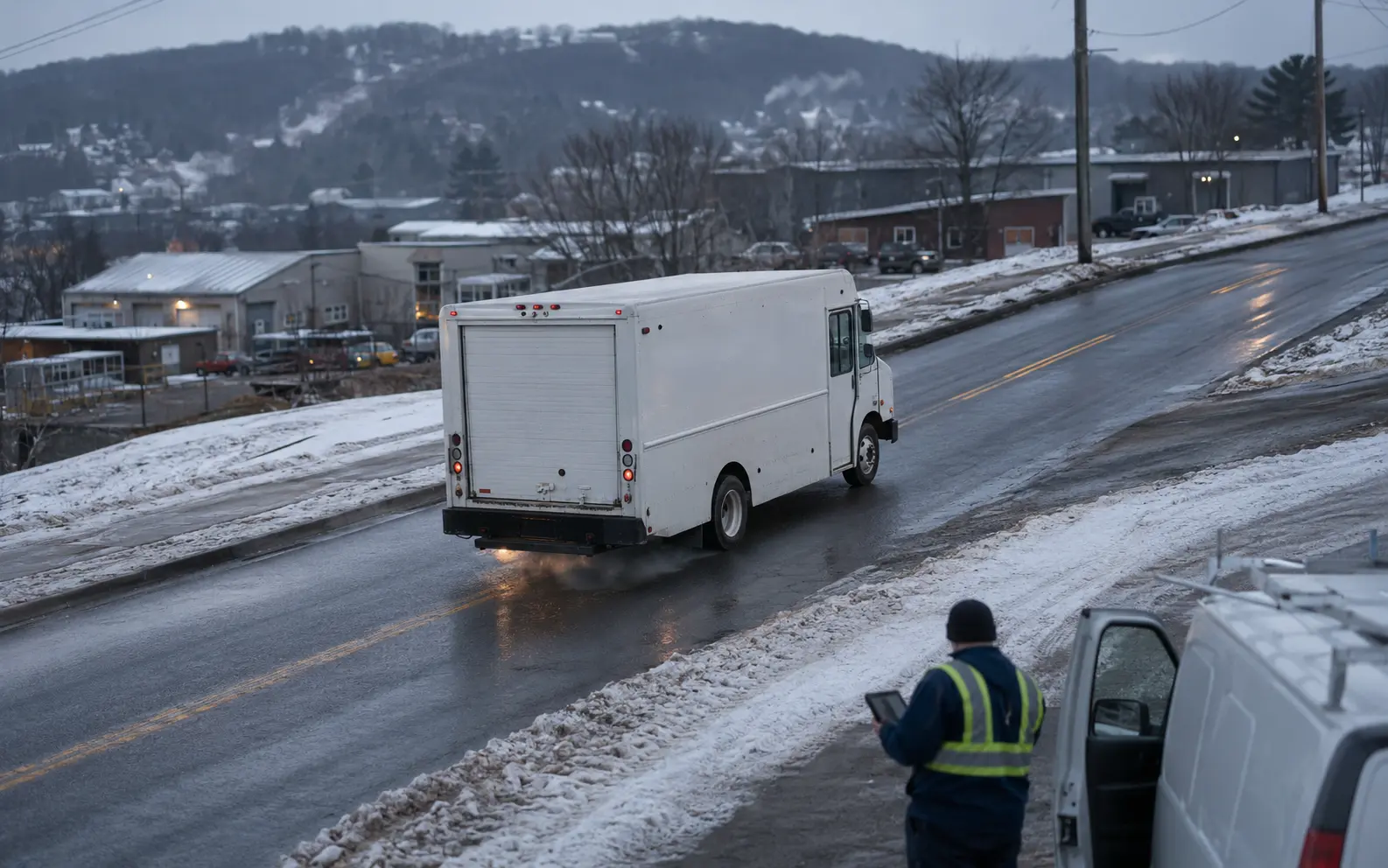
Compare gasoline, diesel, and electric options in the context of stop count, idle time, mileage, terrain, winter operation, and serviceability.
Consider Daily Stop Count and Duty Cycle
Delivery vehicles operate under severe conditions. Frequent starts, stops, door openings, idle periods, and low-speed operation place substantial demands on brakes, batteries, starters, cooling systems, transmissions, doors, and suspension components.
A step van selected for light daily use may become unreliable when placed on a route involving:
- Hundreds of daily stops
- Extended idle time
- Heavy seasonal loading
- Steep terrain
- Repeated short-distance acceleration
- Frequent reverse maneuvers
- Constant opening and closing of doors
- Long operating days
The vehicle’s chassis, powertrain, brakes, cooling system, and maintenance program must match its expected duty cycle.
For intensive last-mile operations, purchase price should not outweigh serviceability and long-term reliability.
Choose the Correct Powertrain
Gasoline
Gasoline step vans may offer:
- Lower initial acquisition cost
- Broad access to service facilities
- Simpler cold-weather operation
- Fewer diesel emissions-system concerns
- Practical performance for lower-mileage delivery routes
Fuel economy and engine life will depend heavily on vehicle size, weight, idle time, and duty cycle.
Diesel
Diesel-powered vehicles may be appropriate for heavier loads, longer operating days, and higher annual mileage. However, modern diesel emissions systems can create problems when vehicles spend most of their time idling or operating at low speed.
Before selecting diesel, consider:
- Annual mileage
- Route speed
- Idle time
- Regeneration requirements
- Access to qualified diesel technicians
- Emissions-system repair costs
- Parts availability
- Expected holding period
A diesel powertrain is not automatically the best choice simply because it is associated with commercial vehicles.
Electric
Electric step vans may work well on predictable routes that return to the same facility each day.
Important considerations include:
- Real-world loaded range
- Cold-weather range loss
- Charging infrastructure
- Utility capacity
- Overnight charging time
- Route mileage variability
- Vehicle acquisition cost
- Battery warranty
- Local service support
- Replacement-vehicle availability
Electric vehicles should be evaluated using actual route data—not advertised maximum range.
Account for Weather and Geography
Operating conditions can materially affect the correct step-van configuration.
Fleets in Pennsylvania, New York, and other northern markets should consider:
- Winter traction
- Tire selection
- Battery performance
- Corrosion protection
- Heating and defrosting
- Windshield and wiper performance
- Ground clearance
- Hill-climbing ability
- Brake wear on steep routes
- Cargo-area water intrusion
- Door operation in freezing conditions
A vehicle that performs adequately in a flat, warm market may be poorly suited for winter routes in Pittsburgh, the Lehigh Valley, or Binghamton.
Review Serviceability and Parts Availability
A step van cannot protect fleet capacity if it becomes difficult to repair.
Before acquiring a vehicle, determine:
- Which local facilities can service the chassis
- Whether parts are readily available
- Whether diagnostic equipment is locally accessible
- How quickly common body components can be obtained
- Whether mobile service is available
- Whether the powertrain has known support limitations
- Whether previous fleet owners modified the electrical system
- Whether replacement doors, mirrors, steps, and lighting are available
Unusual or discontinued configurations may carry an attractive purchase price but create longer downtime and higher repair costs.
Standardizing the fleet around a manageable number of chassis and body configurations can simplify technician training, preventive maintenance, parts stocking, and driver familiarity.