
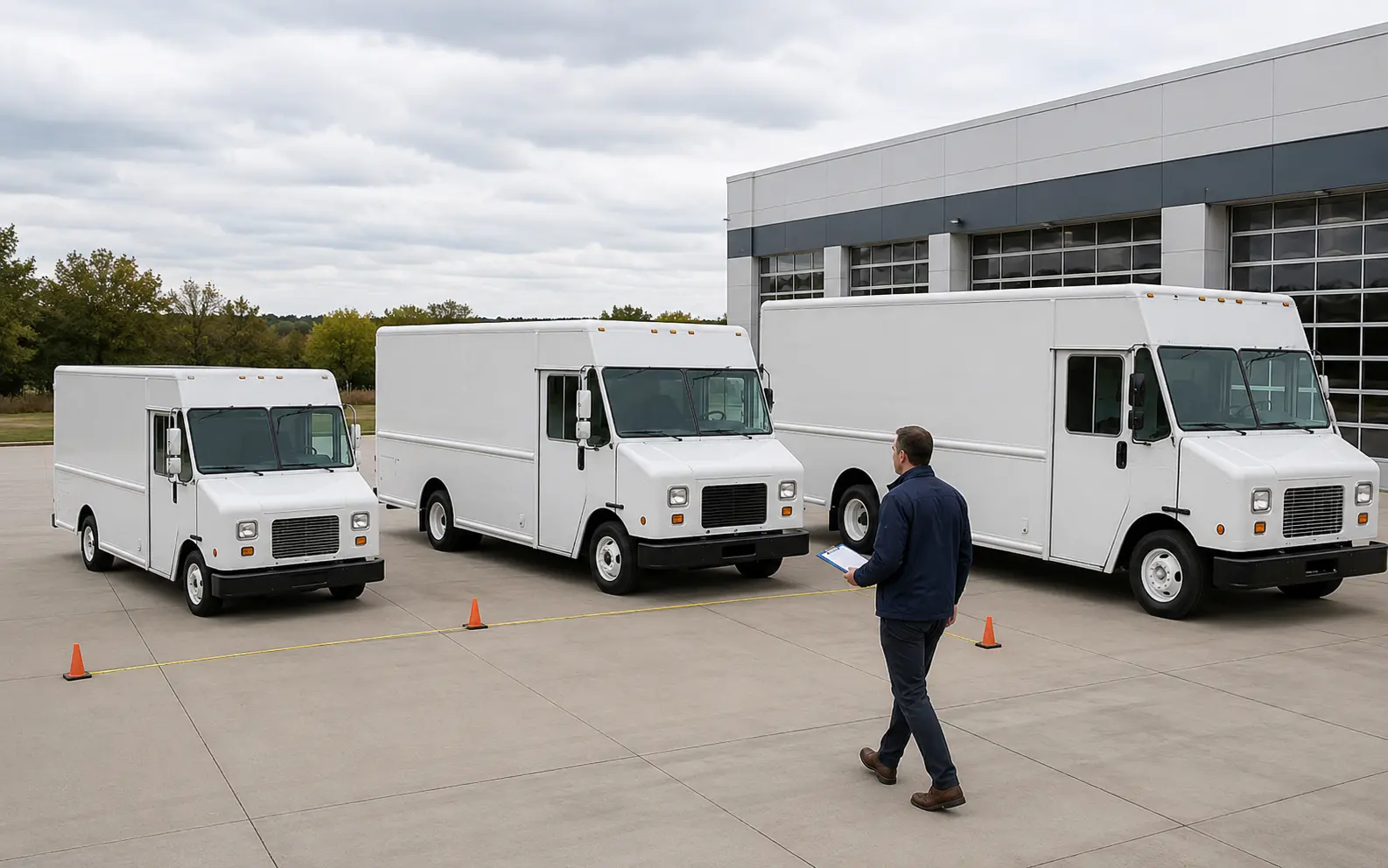
The right step van is not necessarily the largest truck available. It is the vehicle that can carry the route efficiently, operate safely in its service area, and remain dependable under the demands of daily delivery work.
A truck that is too small creates loading problems, poor organization, and unnecessary return trips. A truck that is too large can increase acquisition cost, fuel consumption, maintenance expense, and driver difficulty without improving productivity.
Before purchasing or renting a step van, fleet operators should evaluate the complete operating profile—not just cargo volume.
Start with the Route, Not the Truck
Step-van selection should begin with the work the vehicle must perform.
Evaluate:
- Average and peak package volume
- Cargo dimensions and package mix
- Daily route mileage
- Number of stops
- Urban, suburban, or rural operating conditions
- Residential versus commercial deliveries
- Road width and parking availability
- Terminal loading constraints
- Seasonal volume changes
- Driver experience
- Expected ownership or rental period
A high-density residential route may benefit from a smaller, more maneuverable vehicle even if it must be loaded carefully. A commercial route carrying larger packages may require substantially more cargo volume and a higher payload capacity.
The vehicle should be sized for the actual route, with enough reserve capacity to absorb ordinary daily variation.
Avoid These Common Step-Van Selection Mistakes
Choosing the Largest Available Vehicle
Excess capacity may increase expense and make the vehicle harder to operate without improving route productivity.
Selecting Based Only on Purchase Price
A low acquisition cost can be erased by deferred maintenance, unavailable parts, excessive downtime, or recurring emissions problems.
Ignoring Peak Volume
A truck sized only for average volume may fail during the periods when fleet capacity matters most.
Ignoring the Driver
Poor visibility, difficult doors, excessive step height, and bad shelving reduce productivity every day.
Failing to Verify Payload
Interior space does not establish legal or safe carrying capacity.
Assuming All Step Vans Are Interchangeable
Body size, chassis configuration, powertrain, shelving, rear overhang, and serviceability can make similar-looking trucks perform very differently.
A Practical Step-Van Selection Checklist
Before purchasing or renting, confirm:
- The vehicle has enough usable cargo capacity.
- Payload is sufficient for the expected freight.
- The truck can operate efficiently on the assigned route.
- Body length and turning characteristics fit the service area.
- Shelving supports the package mix and loading process.
- The powertrain matches the mileage and duty cycle.
- Local technicians can service the vehicle.
- Parts are reasonably available.
- Driver ergonomics are acceptable.
- Safety equipment meets operational requirements.
- The vehicle has been mechanically inspected.
- Insurance and registration requirements can be satisfied.
- Preventive maintenance can be completed without excessive disruption.
- Replacement support is available if the vehicle goes out of service.
Frequently Asked Questions
What size step van is best for parcel delivery?
There is no universal best size. Lower-volume or dense urban routes may work well with a 600- to 700-cubic-foot vehicle, while higher-volume parcel routes may require 900 cubic feet or more. Package dimensions, payload, route access, and seasonal volume must also be considered.
Is a larger step van always more productive?
No. A larger vehicle can carry more cargo but may be harder to park, turn, back, and operate on narrow streets. Unused capacity also adds cost without improving route output.
What is the difference between cargo capacity and payload?
Cargo capacity measures interior volume. Payload is the amount of weight the vehicle can safely carry after accounting for the truck, driver, fuel, shelving, and equipment.
Can I rent a step van for a temporary delivery route?
Yes, subject to availability, insurance, location, vehicle eligibility, and rental approval. Short-term rentals can support seasonal volume, breakdown replacement, temporary contracts, and fleet expansion.
Does Sigma Fleet Services offer FedEx trucks for rent?
Sigma Fleet Services offers commercial delivery vehicles that may be suitable for contractors performing FedEx-related service. Availability and eligibility must be confirmed. Sigma Fleet Services is independent and is not affiliated with or endorsed by FedEx Corporation.