
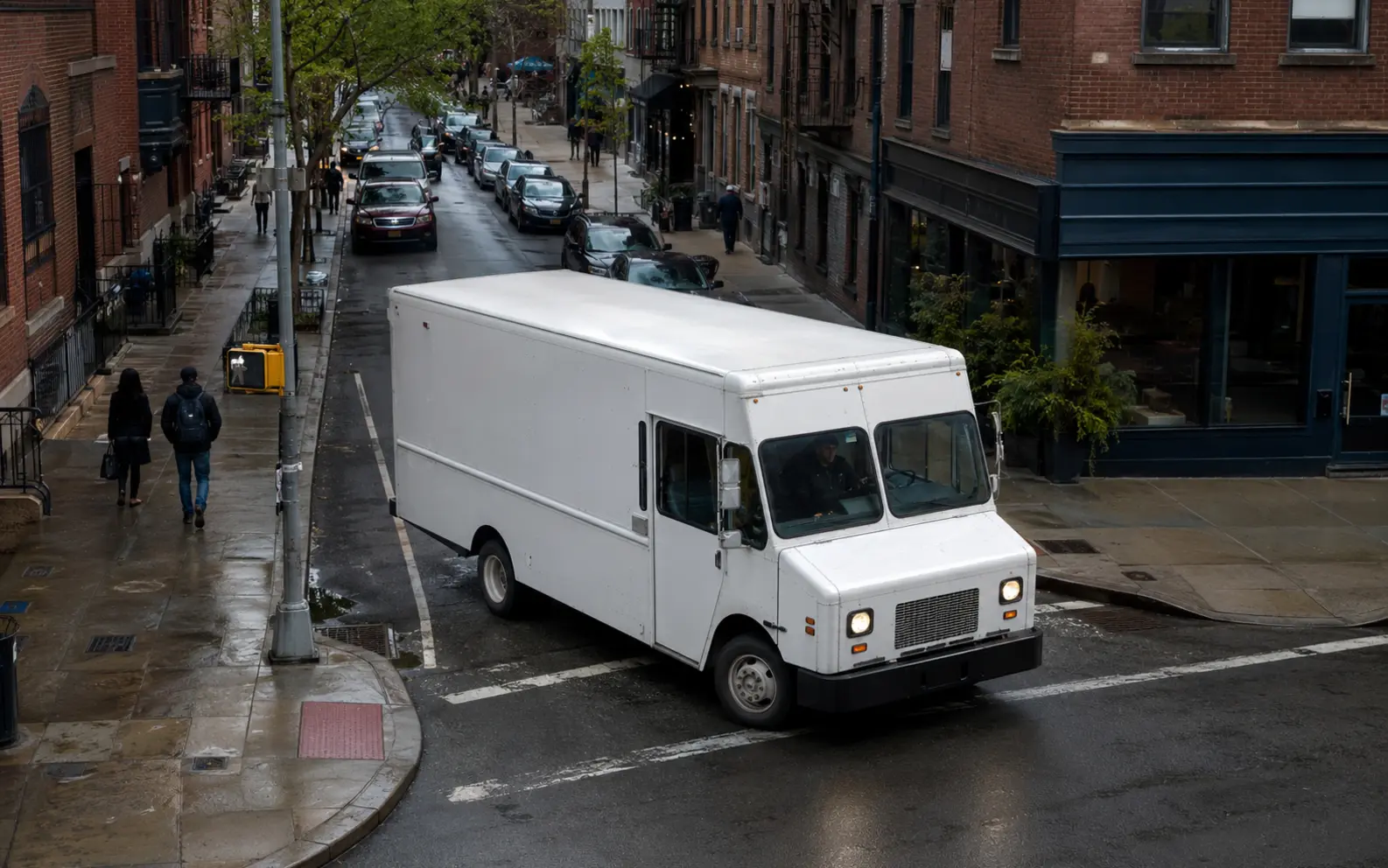
Evaluate urban, suburban, rural, and commercial route conditions before choosing a step-van body size and configuration.
Match the Truck to the Route Environment
Urban Routes
Urban delivery work typically involves narrow streets, limited parking, traffic congestion, tight turns, and frequent stops.
A smaller step van may provide:
- Easier maneuvering
- Better parking access
- Reduced risk of body damage
- Less driver fatigue
- Faster movement through dense neighborhoods
- Improved access to alleys and loading zones
A larger vehicle may hold more packages but lose productivity if the driver cannot position it close to delivery points.
Suburban Routes
Suburban parcel routes often involve moderate mileage, frequent residential stops, and greater package volume. Mid-sized step vans frequently provide a practical balance between cargo capacity and maneuverability.
Vehicle selection should account for:
- Cul-de-sacs
- Residential driveways
- School zones
- Low tree limbs
- Parked vehicles
- Seasonal traffic
- Longer distances between route sections
Rural Routes
Rural routes may involve fewer stops but significantly more mileage. Road conditions, turning areas, fuel range, driver comfort, and vehicle reliability may matter more than maximum cargo volume.
Operators should consider:
- Gravel and unpaved roads
- Steep grades
- Snow and poor weather
- Limited repair access
- Long distances between fuel stations
- Wildlife exposure
- Limited areas for turning around
- Extended drive time
A vehicle with excessive rear overhang or limited ground clearance may be a poor fit for rural service even if its cargo capacity is attractive.
Commercial Routes
Commercial routes may involve fewer stops but larger or heavier deliveries. The correct vehicle may require:
- Greater payload capacity
- Wider aisles
- Fewer fixed shelves
- Space for oversized cargo
- A liftgate
- Carts, dollies, or cargo restraints
- Improved rear or side loading access
The package profile—not simply the package count—should drive the vehicle decision.
Evaluate Maneuverability Before Committing
Body length affects more than cargo capacity. It changes:
- Turning radius
- Rear overhang
- Parking requirements
- Blind spots
- Backing difficulty
- Tail swing
- Clearance needs
- Driver confidence
- Collision exposure
A longer truck may work well on broad suburban roads but perform poorly in dense neighborhoods or congested commercial districts.
A proper evaluation should include a physical route test whenever possible. The driver should test:
- Tight right and left turns
- Cul-de-sac navigation
- Backing visibility
- Loading-dock access
- Terminal parking
- Hill starts
- Driver entry and exit
- Mirror coverage
- Rear and side clearance
Specifications cannot fully show how a truck will behave on a specific route.
Driver Ergonomics Affect Route Productivity
Drivers may enter and exit the vehicle hundreds of times per day. Small ergonomic problems become major productivity and injury concerns when repeated throughout a shift.
Evaluate:
- Step height and condition
- Grab-handle placement
- Seat adjustability
- Steering-wheel position
- Visibility
- Mirror coverage
- Climate control
- Interior lighting
- Cab-to-cargo access
- Door effort
- Aisle width
- Shelf height
- Noise and vibration
The easiest way to assess ergonomics is to have an experienced delivery driver enter, exit, walk through, and load the vehicle.
A truck that is uncomfortable during a short test drive may become intolerable during a full delivery week.