
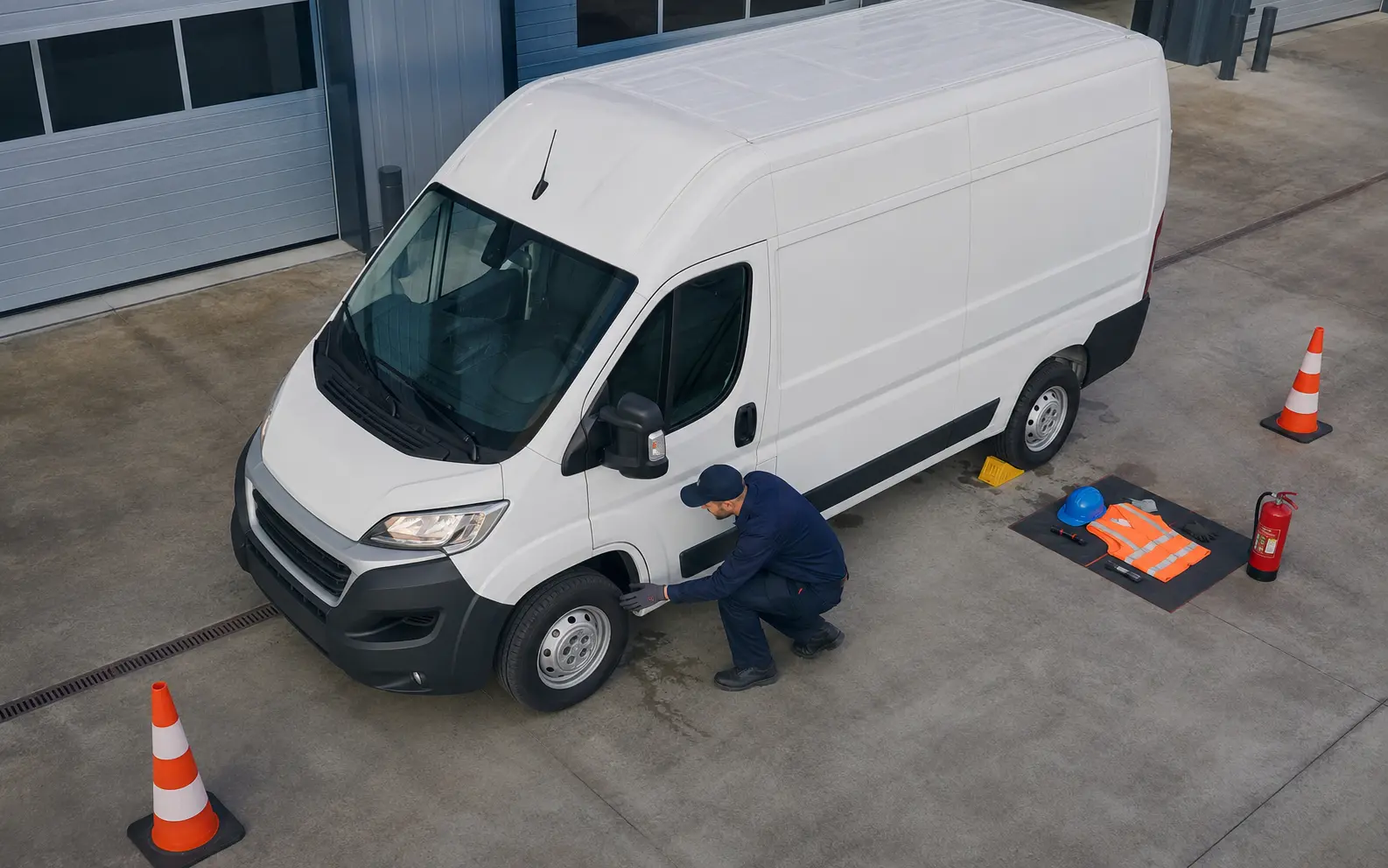
Review known defects, brakes, steering, suspension, tires, lighting, structural components, visibility, cargo securement, and emergency equipment before the annual inspection.
Start with Open Defects and Repair History
Before inspecting the vehicle, review its existing maintenance records.
Look for:
- Open driver-reported defects
- Repairs that were recommended but declined
- Repeat complaints
- Active warning lights
- Recurring brake adjustments
- Unresolved fluid leaks
- Previous out-of-service conditions
- Tire or alignment concerns
- Temporary repairs
- Parts that were ordered but never installed
- Preventive maintenance that is overdue
- Prior inspection failures
Do not allow a known defect to remain unresolved simply because the vehicle continued operating. If a driver, manager, or technician has already identified a problem, the fleet should determine whether it requires repair before the formal inspection.
Pre-Inspection Vehicle Review
Brake System
Brakes are one of the most important parts of any commercial vehicle inspection.
Review:
- Brake operation
- Linings, pads, drums, and rotors
- Hoses, tubing, and connections
- Air leaks, when applicable
- Brake chambers and mounting hardware
- Pushrod travel and adjustment
- Parking-brake operation
- Hydraulic fluid condition and leaks
- ABS warning indicators
- Brake balance and stopping performance
A vehicle should not be sent for inspection with a known brake complaint, warning light, leak, or unresolved adjustment issue.
Steering System
Inspect:
- Steering-wheel free play
- Steering gear
- Pitman arm
- Drag link
- Tie rods
- Ball-and-socket joints
- Steering-column components
- Mounting hardware
- Power-steering fluid and hoses
Loose, worn, cracked, missing, or improperly secured steering components can create immediate safety concerns.
Suspension
Review:
- Leaf springs
- Coil springs
- Air springs
- U-bolts
- Spring hangers
- Shackles
- Torque rods
- Shock absorbers
- Axles
- Mounting points
Delivery vehicles experience repeated curb approaches, potholes, uneven loading, and stop-and-go use. These operating conditions can accelerate suspension wear.
Tires
Inspect every tire for:
- Tread depth
- Cuts and exposed material
- Bulges or separations
- Improper inflation
- Uneven wear
- Sidewall damage
- Contact with other vehicle components
- Mismatched or unsuitable tires
- Valve-stem damage
Uneven wear should not be treated only as a tire problem. It may indicate misalignment, steering wear, suspension damage, or improper inflation.
Wheels and Rims
Check:
- Cracks
- Bent or damaged rims
- Missing, loose, or damaged fasteners
- Elongated bolt holes
- Evidence of movement
- Hub leaks
- Improper repairs
- Wheel-bearing concerns
Rust trails around wheel fasteners, fresh metal, or repeated wheel movement may indicate a problem that requires immediate investigation.
Lighting and Electrical Systems
Verify the operation and condition of:
- Headlamps
- Tail lamps
- Stop lamps
- Turn signals
- Hazard warning lamps
- Clearance and identification lamps
- Reflectors
- License-plate lamps
- Wiring and connections
- Battery mounting
- Dashboard warning indicators
Do not limit the review to whether a bulb illuminates. Fixtures, lenses, wiring, mounting, color, placement, and visibility may also matter.
Fuel and Exhaust Systems
Inspect for:
- Fuel leaks
- Damaged fuel lines
- Loose or missing fuel caps
- Insecure tanks
- Damaged mounting straps
- Exhaust leaks
- Loose exhaust components
- Exhaust discharge near the driver compartment
- Heat damage
- Improper exhaust modifications
Diesel emissions faults may not always be an Appendix A failure by themselves, but active derates, leaks, unsafe exhaust conditions, or unreliable operation should be corrected before the vehicle is returned to service.
Frame and Structural Components
Review:
- Frame rails
- Crossmembers
- Body mounts
- Structural cracks
- Corrosion
- Unapproved drilling or welding
- Loose fasteners
- Collision damage
- Rear impact protection when applicable
- Step and entry structures
Step vans should also be checked for damaged entry steps, grab handles, bulkheads, shelving, and doors that could affect driver or cargo-area safety.
Windshield, Wipers, and Visibility
Check:
- Windshield condition
- Cracks and damaged glazing
- Wiper operation
- Wiper-blade condition
- Washer operation
- Mirrors
- Mirror mounting
- Driver sight lines
- Camera systems used to supplement visibility
A small defect can become significant when it interferes with the driver’s field of vision or the proper operation of required safety equipment.
Cargo Securement and Safe Loading
Inspect:
- Shelving
- Cargo restraints
- Bulkheads
- Interior partitions
- Tie-down points
- Floor condition
- Rear and side doors
- Door latches
- Load distribution
Packages, tools, dollies, and loose equipment should not be capable of moving into the driver’s area or interfering with vehicle operation.
Emergency Equipment
Confirm that required emergency equipment is present, accessible, properly secured, and serviceable.
Depending on the vehicle and operation, this may include:
- Fire extinguisher
- Warning triangles
- Spare fuses or other required protective devices
- Emergency-exit equipment for applicable passenger vehicles
An extinguisher that is discharged, inaccessible, or rolling loose in the cargo area does not provide meaningful compliance or safety protection.
Common Annual-Inspection Failures
Commercial delivery vehicles frequently develop problems involving:
- Inoperative lights
- Worn or damaged tires
- Brake defects
- Loose steering components
- Suspension wear
- Cracked or damaged wheels
- Exhaust leaks
- Fuel leaks
- Damaged windshield glazing
- Inoperative wipers
- Missing emergency equipment
- Loose batteries
- Structural or frame concerns
- Missing inspection documentation
- Incomplete repair certification
Most of these conditions should be identified during routine preventive maintenance or driver inspections. Discovering them during the annual inspection usually indicates a weakness in the fleet’s broader maintenance program.