
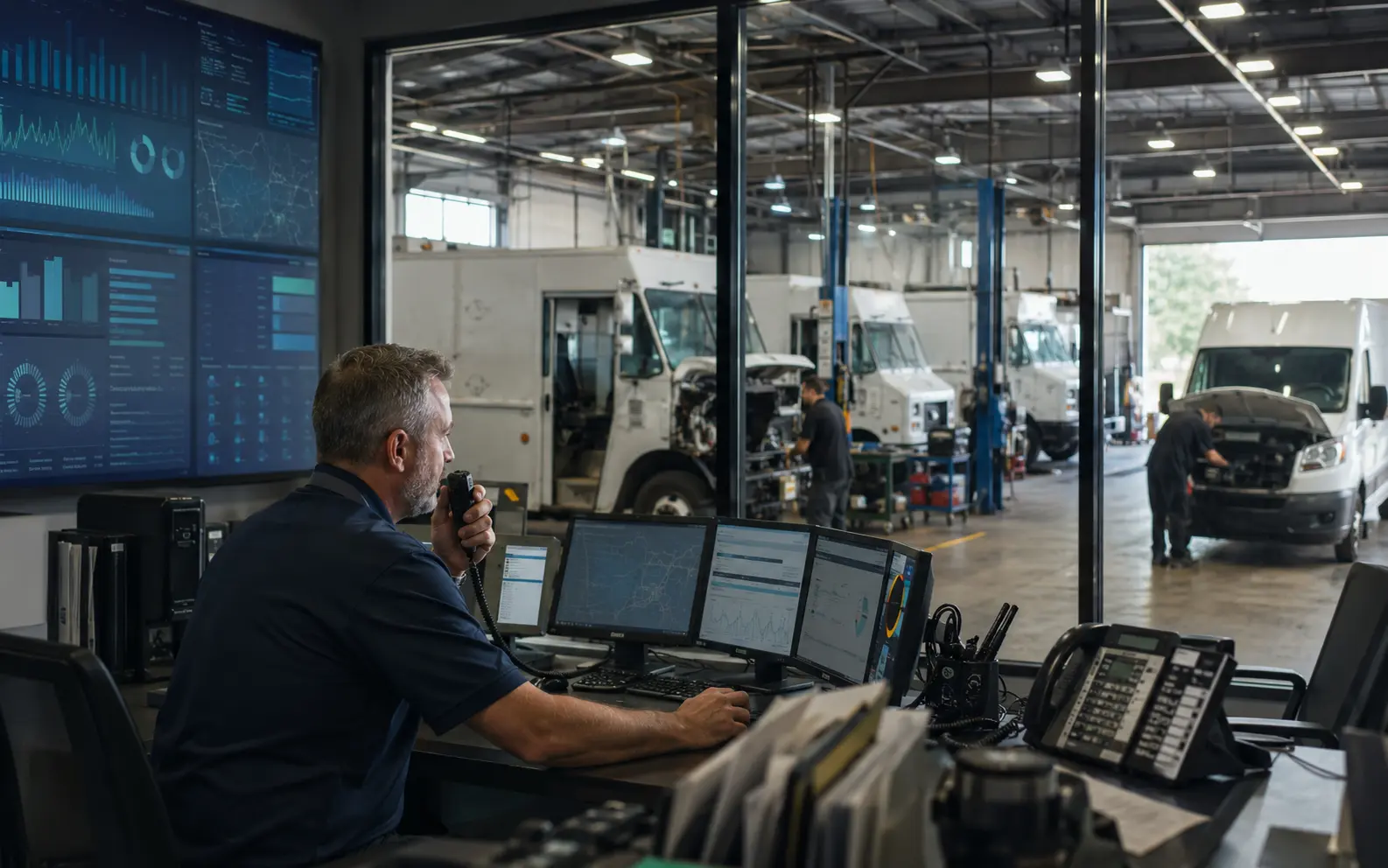
Delivery vehicles do not generate revenue while sitting in a repair facility, waiting for parts, or parked because a minor defect was never reported. For last-mile delivery contractors, downtime can quickly become missed dispatches, rental expenses, overtime, disrupted routes, and service failures.
The real objective is not simply to repair vehicles faster. It is to prevent avoidable failures, identify problems earlier, and build enough repair and replacement capacity to keep routes operating when breakdowns occur.
Sigma Fleet Services helps commercial delivery operators reduce downtime through preventive maintenance, mobile fleet service, commercial vehicle repair, and short- and long-term truck rentals.
The True Cost of Fleet Downtime
A disabled truck creates costs far beyond the repair invoice. One vehicle going out of service can affect drivers, routes, dispatch operations, customer service, and the rest of the fleet.
Downtime may result in:
- Missed or delayed dispatches
- Emergency truck rentals
- Driver overtime
- Route consolidation
- Increased miles on available vehicles
- Towing and roadside-service expenses
- Missed preventive maintenance
- Higher risk of additional breakdowns
- Reduced spare-fleet capacity
- Contractual or service-performance consequences
The most expensive breakdown is often not the one with the largest repair bill. It is the one that occurs without warning during a high-volume operating period when no replacement vehicle is available.
Build a Downtime Plan Before the Next Breakdown
Fleet downtime becomes expensive when every failure requires a new decision. Operators should establish repair priorities, approval limits, service providers, replacement procedures, and escalation rules before a truck becomes unavailable.
A disciplined downtime program should answer five questions immediately:
| 1. | Is the vehicle safe to operate? |
|---|---|
| 2. | Can mobile service resolve the problem? |
| 3. | Who is responsible for diagnosis and repair? |
| 4. | When will the vehicle return to service? |
| 5. | What equipment will protect the route until it does? |
If your fleet is experiencing recurring breakdowns, slow repair response, or inadequate replacement capacity, Sigma Fleet Services can help evaluate the current process and develop a more reliable maintenance and rental strategy.
Keep Your Delivery Fleet Moving
Contact Sigma Fleet Services to discuss commercial fleet repair, preventive maintenance, mobile fleet service, or delivery trucks for rent.
Call: 412-357-1000
Request Service: www.sigmafleetservices.com/contact
Frequently Asked Questions
How can a delivery fleet reduce preventable downtime?
Start by tracking every out-of-service event, enforcing preventive-maintenance intervals, requiring prompt driver defect reporting, establishing repair-approval limits, and reviewing recurring vehicle failures.
Is mobile fleet service faster than taking a truck to a repair shop?
For many inspections, maintenance services, diagnostic issues, and minor repairs, mobile fleet service can reduce turnaround by eliminating towing and transportation time. Major repairs may still require a commercial repair facility.
Does Sigma Fleet Services offer FedEx trucks for rent?
Sigma Fleet Services offers commercial delivery trucks that may be suitable for contractors performing FedEx-related delivery operations, subject to vehicle availability, location, insurance, eligibility, and rental approval. Sigma Fleet Services is an independent company and is not affiliated with or endorsed by FedEx Corporation.
Should a fleet rent or own spare trucks?
Most fleets benefit from a combination of owned spare vehicles and access to short-term rentals. The correct mix depends on fleet size, seasonal demand, vehicle age, repair frequency, and access to replacement equipment.
What is the most important fleet downtime metric?
Total out-of-service time is the clearest starting point. It should then be separated into diagnosis time, approval time, parts delay, active repair time, and return-to-service delay so management can identify the actual bottleneck.