
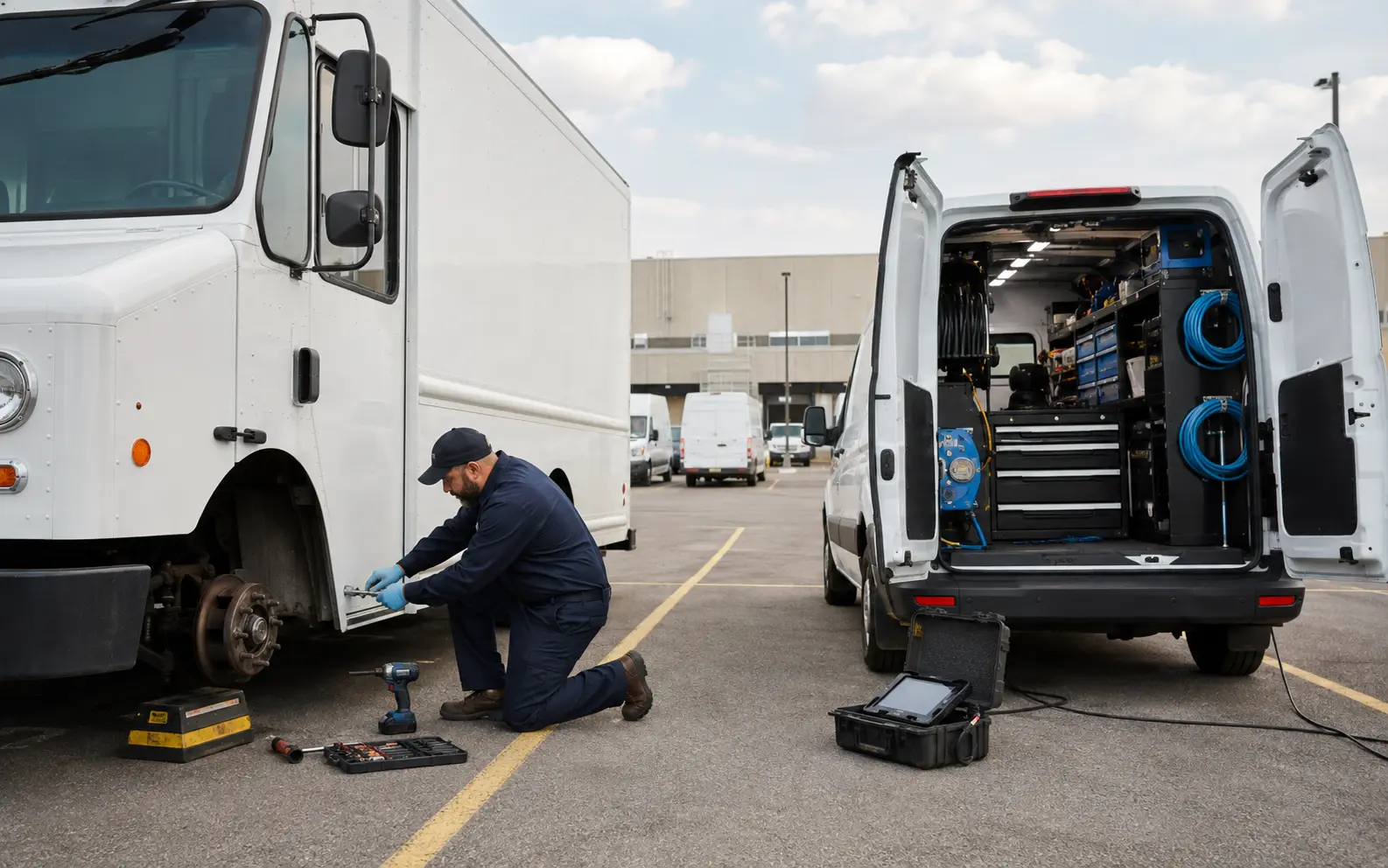
Understand when on-site maintenance, diagnostics, and minor repairs can eliminate towing and vehicle movement while shortening the total repair cycle.
Use Mobile Fleet Service to Reduce Repair Cycle Time
Many fleet problems do not require a tow or a trip to a traditional repair facility. Mobile fleet service can often complete inspections, preventive maintenance, diagnostics, and minor repairs where the vehicles are already parked.
Depending on the vehicle and repair requirements, mobile service may be appropriate for:
- Preventive maintenance
- Battery replacement
- Starting and charging-system diagnosis
- Lighting repairs
- Minor electrical issues
- Belt and hose replacement
- Brake inspections
- Fluid leaks
- Door and body hardware
- Basic diagnostic services
- Fleet condition inspections
- Minor roadside repairs
Mobile service eliminates unnecessary vehicle transportation and allows work to be scheduled during evenings, weekends, or other periods when trucks are not producing revenue.
It is not the correct solution for every repair. Major engine, transmission, structural, alignment, or specialized emissions work may require a fully equipped facility. The key is routing each repair to the right service channel immediately.
Create a Repair-Triage Process
Every reported defect should be assigned a priority based on safety risk and operational effect.
Priority 1: Safety-Critical
The vehicle should not be operated until inspected and cleared.
Examples may include:
- Brake-system concerns
- Steering problems
- Severe tire damage
- Fuel leaks
- Major suspension failures
- Unsafe doors or steps
- Conditions affecting legal operation
Priority 2: Dispatch-Critical
The vehicle may not be safe or reliable enough to complete its next route.
Examples may include:
- No-start conditions
- Overheating
- Charging-system failures
- Significant fluid leaks
- Transmission problems
- Engine derate or emissions shutdown warnings
Priority 3: Service Soon
The vehicle may remain operational temporarily, but a repair should be scheduled promptly.
Examples may include:
- Minor leaks
- Noncritical warning lights
- Worn components not yet below limits
- Intermittent electrical issues
- Body or cargo-area damage affecting usability
Priority 4: Planned Repair
The issue can be grouped with future preventive maintenance or scheduled body work without creating an immediate safety or service concern.
This triage system keeps minor issues from overwhelming the repair process while ensuring dangerous or dispatch-threatening problems receive immediate attention.
Manage Repairs with Time-Based Escalation
Every open repair should have an owner and a next action. A practical escalation schedule may include:
- Immediate acknowledgement of a reported defect
- Initial triage within a defined response window
- Diagnosis or service plan the same business day
- Approval promptly after receiving an estimate
- Daily updates for every out-of-service vehicle
- Management escalation when a repair exceeds its expected completion date
- Replacement-vehicle review when downtime threatens scheduled operations
Repair orders should never disappear into an open-ended shop queue.