
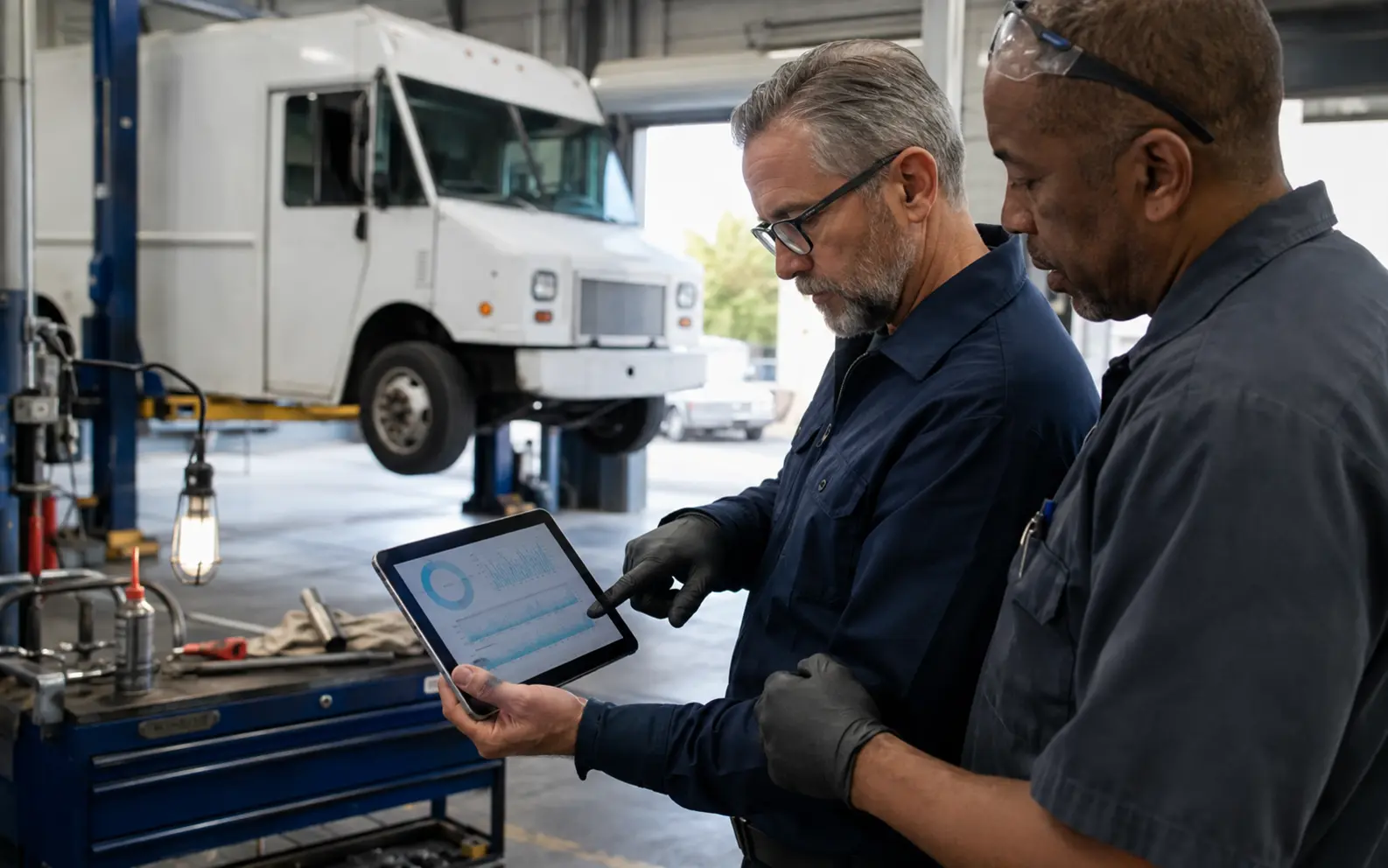
Track out-of-service time, diagnosis delays, approval time, parts constraints, and repair turnaround so fleet leaders can identify the real sources of lost capacity.
Build a Fleet Downtime Baseline
You cannot improve downtime without measuring it. Each out-of-service event should be documented from the moment the vehicle becomes unavailable until it is cleared for operation.
At a minimum, track:
| Data point | Why it matters |
|---|---|
| Unit number | Identifies recurring vehicle-level problems |
| Date and time reported | Establishes the beginning of downtime |
| Defect or complaint | Shows why the vehicle was removed from service |
| Reporting source | Identifies whether the driver, manager, or technician found the issue |
| Vehicle location | Helps coordinate towing, mobile service, or replacement equipment |
| Repair provider | Allows vendor performance comparisons |
| Diagnosis time | Measures how quickly the problem was evaluated |
| Approval time | Exposes internal administrative delays |
| Parts availability | Identifies supply-chain bottlenecks |
| Repair completion time | Measures actual turnaround |
| Return-to-service time | Captures the full operational delay |
| Total repair cost | Supports repair-versus-replacement decisions |
| Repeat repair status | Identifies ineffective or incomplete repairs |
Do not measure only the hours a technician worked on the truck. A vehicle may receive three hours of labor but remain unavailable for four days. The fleet lost four days of productive capacity.
Track the Right Fleet Metrics
Fleet availability should be reviewed weekly, not just when a breakdown creates a crisis.
Useful performance indicators include:
- Fleet availability percentage
- Total out-of-service days
- Average time to diagnosis
- Average time to repair approval
- Average repair turnaround
- Preventive-maintenance compliance
- Roadside breakdown frequency
- Repeat-repair rate
- Repair cost per mile
- Downtime by vehicle
- Downtime by repair category
- Downtime by service provider
- Rental days caused by maintenance failures
- Number of dispatches protected by spare or rental units
These measurements reveal whether the problem is vehicle condition, internal decision-making, parts availability, or vendor performance.
When Should a Vehicle Be Replaced?
Repeated repairs can make an older truck appear inexpensive because each individual invoice seems manageable. Collectively, however, the vehicle may be destroying productivity.
Replacement should be considered when:
- The vehicle experiences repeated roadside failures
- Repair costs continue rising
- Parts are becoming difficult to obtain
- The truck regularly misses dispatches
- Major powertrain or emissions repairs are expected
- Downtime costs exceed the economic benefit of keeping the unit
- The vehicle no longer fits the fleet’s operational requirements
The decision should consider repair expense, downtime, rental cost, lost productivity, resale value, financing cost, and expected future reliability—not mileage alone.