
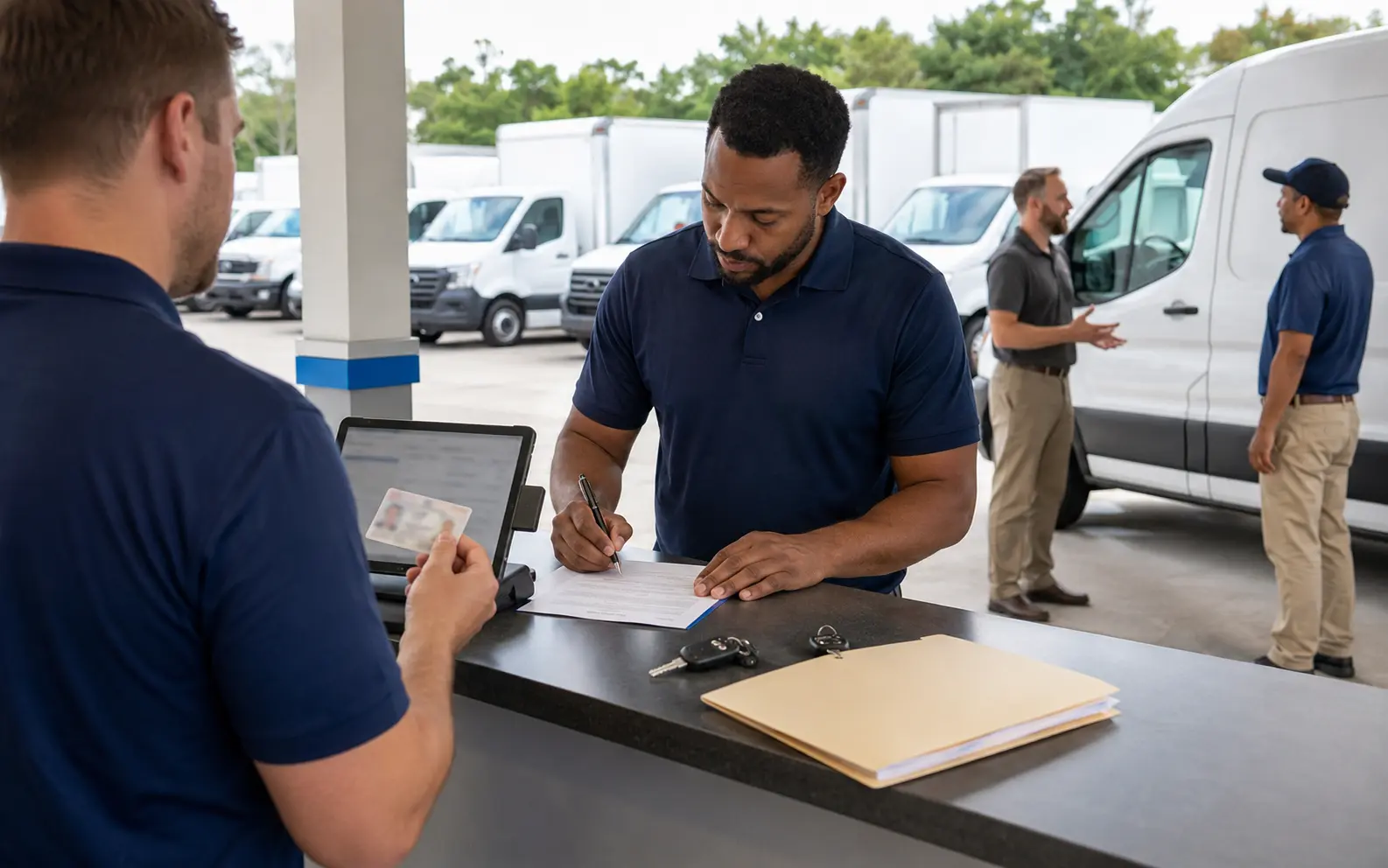
Complete insurance review, authorize drivers, inspect rental vehicles, and establish maintenance responsibility before the vehicle enters service.
Complete Insurance Review Before Peak
Insurance delays can prevent an otherwise available rental vehicle from entering service.
Confirm:
- Required liability limits
- Physical-damage coverage
- Additional-insured requirements
- Loss-payee requirements
- Permitted drivers
- Geographic restrictions
- Vehicle-use restrictions
- Deductibles
- Rental-duration limitations
- Certificate wording
- Coverage effective date
- Cancellation-notice requirements
Send the requirements to the insurance provider early. Do not wait until the planned pickup date to discover that an endorsement or revised certificate is required.
The rental agreement and final insurance requirements control.
Prepare Drivers for Rental Equipment
Drivers should not encounter an unfamiliar vehicle for the first time during peak dispatch.
Before assigning a rental truck:
- Confirm that the driver is authorized and properly licensed.
- Review vehicle dimensions and clearance.
- Adjust mirrors and seating.
- Demonstrate door and latch operation.
- Explain warning lights and controls.
- Review fuel or charging requirements.
- Confirm camera and telematics procedures.
- Conduct a documented condition inspection.
- Perform a short familiarization drive when appropriate.
- Review accident and breakdown procedures.
Rental vehicles may handle differently from the fleet’s normal equipment. Changes in turning radius, tail swing, braking feel, height, and camera placement can increase collision risk.
Inspect Every Rental Before Acceptance
Document the vehicle’s condition before it enters service.
Inspect:
- Exterior body
- Roof
- Windshield
- Mirrors
- Lights
- Tires
- Wheels
- Brakes
- Warning indicators
- Fluid levels
- Doors and locks
- Steps and grab handles
- Shelving
- Cargo floor
- Interior damage
- Odometer
- Fuel or charge level
- Registration and inspection documents
- Emergency equipment
- Cameras and installed accessories
Take date-stamped photographs or video. Record all existing damage on the delivery or condition report before accepting the unit.
Verbal notice alone is weak protection in a later damage dispute.
Establish Maintenance Responsibility
The rental agreement should clearly identify who is responsible for:
- Preventive maintenance
- Oil and filter service
- Tires
- Brakes
- Mechanical failures
- Roadside service
- Towing
- Collision repairs
- Driver-caused damage
- Warning-light response
- Maintenance authorization
- Repair-facility selection
- Downtime replacement
- Documentation
A rental vehicle should be entered into the fleet’s maintenance and inspection system just like an owned vehicle.
Do not assume the rental company is monitoring mileage or vehicle condition unless the agreement and operating process specifically establish that responsibility.